Species Interactions and Marine Food Webs - Experiments in Marine Food Web Ecology
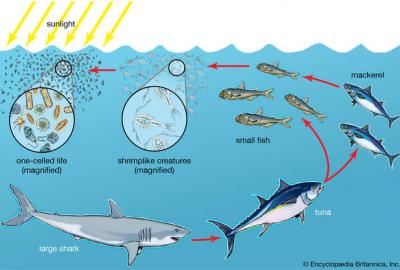
This course deals with experimental quantification of biotic interactions amongst marine organisms relevant for ecosystem functioning: competition, trophic interactions (predation, herbivory..), and the critical interpretation of the outcome of experiments in relation to its design and the organism(s) and ecosystem under study. To answer ecological research questions by means of well-designed experiments (lab or field). To use experimental tools for the observation, quantification and modification of species interactions. To quantify energy flow in marine food webs. To critically interpret the results of experimental approaches in relation to the characteristics of the species, community and habitat under study at different temporal and spatial scales.
Course contents
The course will follow a 3-steps approach, whereby theory will be followed by a substantial pratical part according to the following scheme:
- Step 1 (preparatory phase): analysis of an actual research question, literature study and design of an experiment to answer the question put forward: correct formulation of a research question and hypothesis, digital sources analysis, experimental design, selection of model organism and model system, obtaining biological material (field or culture), critical interpretation of available protocols.
- Step 2 (experimental phase): set-up of the experiment and application of up-todate experimental facilities within the Belgian node of the European Marine Biological Resource Centre (EMBRC) network (including culture collections): lab or field experiments, small-scale or large-scale, habitat-specificity of an experiment (intertidal, subtidal, deep sea, soft or hard substrate, benthic or pelagic, …), planning and feasibility and risk analysis of an experiment, monitoring different experimental treatments, use of up-to-date techniques including trophic markers (stable isotopes, fatty acids, compound-specific isotope analyses), tracer experiments.
- Step 3 (interpretation phase): interpretation and correct reporting of the obtained outcome, standardisation of obtained measurements, failure analysis.
Final competences
- Students should be able to apply biological and ecological knowledge to make decisions about practical aspects of the design of experiments, the setup of (lab or field, microcosm or mesocosm, short-term or long-term) experiments making use of up-to-date techniques and multidisciplinary tools.
- Critical interpretation of and correct reporting on the material & methods of an experiment and its outcome
- To learn how to interpret interactions amongst marine species in different settings, how to quantify energy fluxes in marine food webs by means of experimental approaches and how to apply up-to-date experimental tools to answer ecological questions
Further course information can be found here: https://studiekiezer.ugent.be/2026/studiefiche/en/C003893