Field Practices, Sampling Design and Census of Marine Communities
This course aims to provide a baseline for field work at sea, enabling the students to acquire the skills needed for research activities in the marine environment. The field course deals with theoretical and practical issues on biological sampling. The students will gain basic knowledge and skills to:
- plan field activities and build a timetable
- choose the most appropriate methods of census of marine communities in
- relation to an environmental target
- manage and label the collected samples properly
- identify main taxa of marine benthic organisms (from both hard and soft substrates)
- manage the information to build a dataset
The course includes lectures and practical training in the field and in the lab
Course contents
Theoretical lessons
Through theoretical frontal lessons the students will comprehend:
- details of several destructive and non-destructive sampling techniques
- concepts of population, sample and sample representativeness
- the importance of evaluating the feasibility of a planned sample strategy
- the importance of knowing phenology of marine organisms for defying a sampling strategy
- how to choose the most appropriate sampling method
Practical activities in the field
The aim of practical activities is to apply some of the techniques illustrated during the theoretical part of the course. Since part of the students may not have a diving license, most of the activities will be carried out on the seashore. They will include from four to five activities (little variation in the planned activities could occur in case of bad weather conditions):
- sampling of benthic macrofauna on the intertidal zone of a sandy beach (method: hand corers)
- sampling of seaweeds on the intertidal zone of a rocky beach (method: scraping)
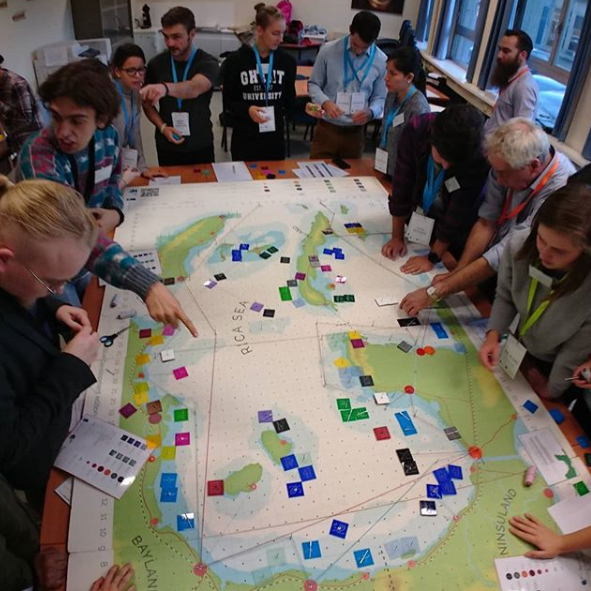
- simulation of a depth transect using shapes of benthic organisms and fish (visual census, quadrats)
- collection of marine litter following the protocol of the Marine Strategy
In the lab students will examine different phyto- and zoo-benthic taxa to learn the main identification approaches.
Briefing and analysis of underwater pictures through the free software PhotoQuad to determine the percentage cover of the organisms
Diving activities may be performed depending on meteomarine conditions and level of diving license. Diving activities will be performed during field trips and costs will be defined depending on the number of participants and destination. Diving activities will be permitted only students having a diving license, and a valid (lasting no more than one year) medical certificate specific for diving activities (released by a hyperbaric physician).
Final competences
- Enhanced knowledge about the main techniques and methodologies for specific case studies, in either research activities or conservation issues.
- Increased dexterity in managing sampling tools and collected samples.
- Improved ability in setting a sampling strategy.
- Advanced cognizance about the identification of main marine taxa, at least at family level.
- Improved problem-solving propensity.
- Increased ability to apply concepts/methods illustrated in the course to a real situation
Further course information can be found here: https://studiekiezer.ugent.be/2026/studiefiche/en/C004349